WI Townships Contend with Frac Sand Regulation – Editorial

*Editor’s note:  “THE PRICE OF SAND” – an advance preview of a locally produced frac sand documentary,  is tomorrow Thursday, March 28 at 7 PM – Grandview Theater, 1830 Grand Ave., St. Paul, MN.

film trailer at: http://youtu.be/n4HYZQDgQbM
For more information, and advance ticket sales, visit www.thepriceofsand.com or on Facebook

Rural Western Wisconsin is known for its hospitable nature, and its “live at let live” method of getting along. Many families have lived in homesteads for several generations, but many “new” (less than fifty year residents) folks have sought out the rolling hills, valleys, and small rivers that call to those in touch with the land. The tradition is that you may not have much, but if you have land, you have standing. The rights of landowners are held sacrosanct, and what you do there is mostly your business. Many who have arrived bring a different ethic, that land is also a collective resource, whose environmental protection is a must. It is the stage for conflict when the frac sand mines come to town.

Vance Creek is a non zoned township. You need a dog license, county permits for building and related activities but other than that, do what you will. The residents near the “four corners” area of SW Barron County watched for mining to arrive. It has spread West from HWY 53, the New Auburn area, and erupted just across the line in Arland Township (TWP). The railroad line along Hwy 8 through Taylors Falls had been improved and ready for shipping sand. The perfect place for mining is in the corner of the county where few pay any notice. The first mining site in Vance Creek Township was targeted adjacent to a large tract of Barron County Forest land, on which the county had denied mining permits. What caused Vance Creek to erupt in concern was the township wide realization that  *** one of three town board members was having exploratory assessment for frac sand mining done on his land.

Area of mining exploration and existing mines in SW Barron County, Wi.

Area of mining exploration and existing mines in SW Barron County, Wi.

The strategy of concerned residents across Wisconsin is to avoid zoning, we don’t care for it here, thank you. Townships in the this area have been either passing “moratorium ordinances” on mining operations for anywhere from 6 months to two years, or they have been passing a township non-metallic mining ordinance that requires a permit for the operation of non-metallic mines and sets forth the application process. As soon as the mining exploration rumor was verified in the township a group of town residents started meeting, and asked the town secretary to put consideration of a draft moratorium ordinance on the agenda of the next town board meeting Jan. 8th 2013. Shit hit the fan. Continue reading

The Human Impact of Frac Sand Mining – Editorial

Microscopic Silica Particles Cause Lung Damage             photo: http://elcosh.org

There are several studies on the impacts of frac sand mining underway, from many different perspectives. There are no comprehensive studies that are available now.  Citizens feeling powerless to have any control over this intrusion into their environment are resorting to videos to get their stories out. I invite you to take a few minutes and listen to some of these, they say it best.

There is no doubt that jobs are created with any mining operation. The numbers used speculate on numbers of plants, rapid growth, and stability of the industry. Many of the jobs created are driving heavy equipment and trucks. These jobs require training often necessitating recruiting workers from outside the impacted areas,  and are seasonal. Numbers are computed based on “man-hours” of operation. The reality is often 10-16 hour shifts, and when allowed to mines operate 24 hours, seven days a week to maximize profits.

Proponents argue the increase in local taxes collected will help the local community’s tax base, lowering taxes for everyone.  Even in a heavily regulated local environment, the reality experienced in Wisconsin is that only with carefully crafted ordinances does the actual cost of mining on local services even get repaid. Often low traffic roads suddenly become truck freeways, and the affected towns and counties bear the cost of any improvements needed just to meet safety concerns.  In a well crafted ordinance the additional expenses of road maintenance, dust removal, sewer demand or waste water cleanup, and reclamation of the site are all protected with bonding in advance. For townships, there is no well-defined county or state testing of air and water quality that is required with these operations, so any specific testing to meet concerns of local residents must be funded by local government.

Continue reading

Non-Metallic Mining takes Wisconsin by Dust Cloud! – Editorial

This is the start of a series about frac sand mining.  It is a contentious issue.  Is it rampant exploitation and environmental damage, or simple economic growth?  I believe it is of concern to Pagans because whatever you think of it, it is likely going to directly change the landscape you encounter when you leave the city. This article is mainly background (please investigate the many hot links) , but you need it to understand the issue.

Frac Sand Minephoto: La Crosse Tribune

Frac Sand Mine
photo: La Crosse Tribune

First, you need fracking sand to engage in “fracking”.  Second, from Rueters, Houston, TX. , “There’s been a sand shortage in the U.S. … Those who have sand or have access to sand can pretty much charge what they want.”  So there’s lots of money at stake.

photo: About.com

photo: About.com

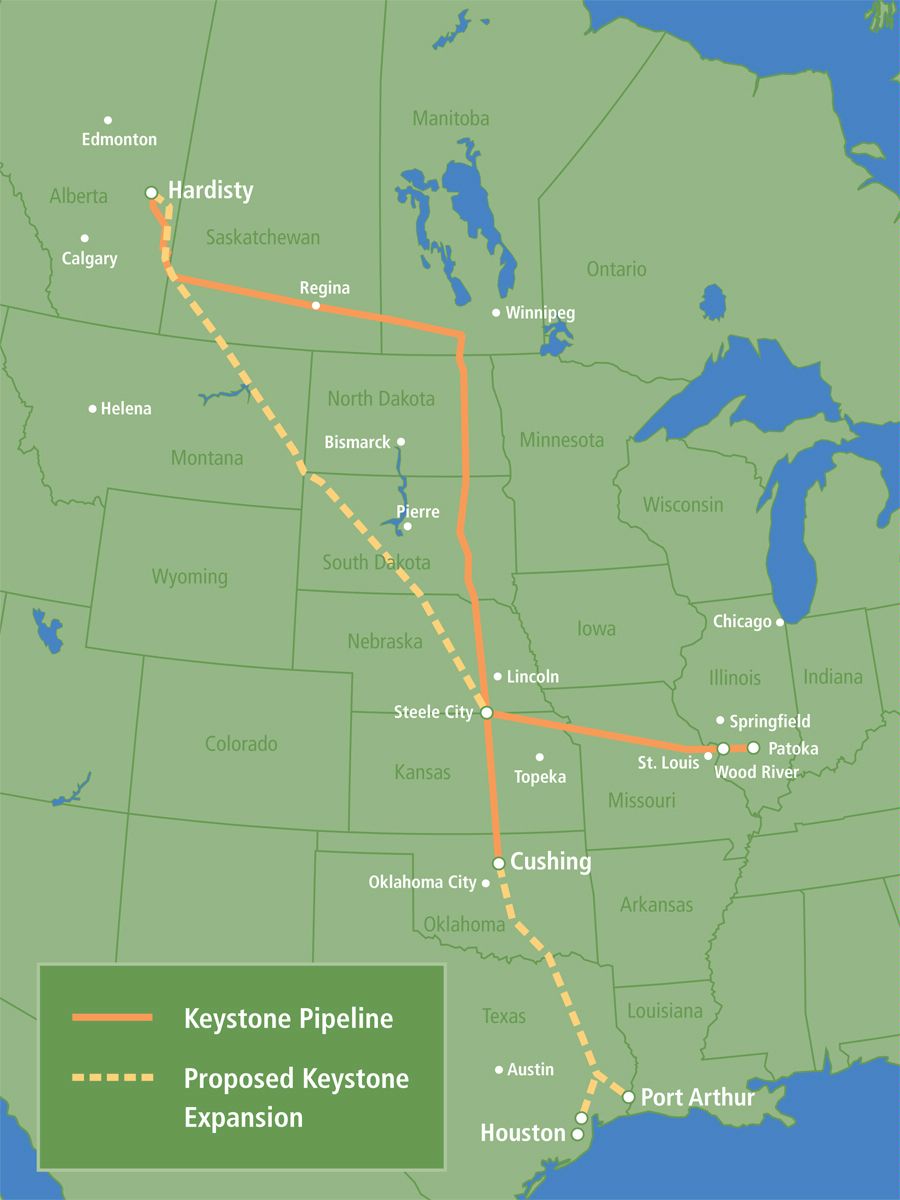
Hydraulic fracturing, or “fracking” as it is called, is taking place in many parts of our country, particularly North Dakota, Pennsylvania, and Texas.  It is usually either touted as the miracle technological solution to gain economic growth and energy independence, or condemned as a reckless exploitation of resources that endangers our ground water, air, and land, and has way too many unknowns associated with its environmental and geologic effects. What is confirmed is this highly profitable method of gaining trapped oil from tightly bound deep shale deposits, not accessible with conventional drilling methods has exploded as a phenomena nationwide. This is what the ‘Keystone pipeline” expansion is proposed for;  to get fracked oil from North Dakota and Canada to Texas refineries. National Geographic has a headline story about it in their March, 2013 issue. While fracking has been used in the development of America’s natural gas resources for nearly 60 years. The development of horizontal drilling process has allowed its use to rapidly expand and include oil drilling. It is a hidden process, tightly held as corporate proprietary property, while leaving a small footprint above ground and visible to the public. Fracking boomed after the Energy Policy Act in 2005 exempted oil and gas production from compliance with the Safe Drinking Water Act, the Clean Air and the Clean Water Act. Also, the CERCLA Superfund Act doesn’t cover fracking sites.

historyoffrackin

History of Fracking

The basic fracking process is to drill down through the water table, maybe 2000 feet or so until you hit the layer of shale where the oil lies trapped. You then drill sideways within the layer of shale. As you proceed, a slurry of silica sand, water, and proprietary chemicals (some known carcinogens) is rammed out a  porus drill point, “fracturing” the shale so the oil is released and can be pumped out (mixed with water and chemicals). This also releases natural gas. The natural gas is being flared off at the well by burning, it is not apparently profitable enough to collect it. This is why the ND night sky is lit up like Chicago. News stories of inflammable faucets and large stores of chemical laden water waiting to be treated and pumped back down through the water table into deep repository holes,  accompanies the process.

Unsaid, but many think, “It is only North Dakota, if my gasoline is cheaper and American drilled, it is a small price to pay for oil self-reliance and “national security”. It is so easy to talk this way when it happens somewhere else. Wisconsin happens to be extremely rich in the silica sand used in this process, and this year that sand wealth has brought these issues smack into our face.

Continue reading

Editorial: Watching Teo be the Bishop in San Jose

Editor’s Note:  PNC-Minnesota reprinted this editorial from PNC-Bay Area as Teo Bishop is a featured guest for 2013’s Sacred Harvest Festival.

I enjoyed several rituals and workshops this year at Pantheacon and felt very happy to be a part of such a magical event. This year I had the privilege of going to a workshop in the Ár nDraiocht Fein (ADF) suite that actually turned out to be one of my all-time favorite experiences at Pantheacon. Teo Bishop did a talk called “Being the Bishop”; where he openly reflected on his life, career as Matt Morris, spiritual transition into Teo Bishop, and the merging of both sides of himself today. As the writer of the blog, Bishop in the Grove, I have been reading his blog for some time, yet did not know what to expect. I was not disappointed.

Not only was Teo engaging and transparent in his sharing of his life but he showed a very intimate side of himself through his stories and his music. It was the first time I got to hear Teo sing in person, I had only heard one or two songs online after finding out about his career as Matt Morris. I sat with my husband and a hand full of close friends as if I were at a concert in someone’s living room. He sang and I cried. He talked and I listened. He smiled and I smiled; it was a truly transformative experience to see someone talk about the introspective transition between fame and spirituality.

teo presentations pconThere was no special stage, no lighting crew and no back-up band. There was only Teo and a bunch of people immersed in the world of his magic inside of a small hospitality suite on the second floor of the Double Tree Hotel.

Teo sung several songs from his 2010 album When Everything Breaks Open. He played his acoustic guitar and pulled from a place deep within his spirit. While he mentioned that his songs were not Pagan, I still heard the internal struggle of where he was spirituality, at the time, in his lyrics.

teo bishop

Picture courtesy of David Salisbury

As one of the upcoming 2013 national guest for the Sacred Harvest Festival in Minnesota, Teo Bishop is transcending beyond his blog and moving into an arena of Pagan artists that comes from behind the screen.  If this presentation at Pantheacon is a small portion of what I can expect from his spot on the upcoming Sacred Harvest Festival ticket, I am even more excited to share Pagandom with him. This version of spiritual transformation went beyond the typical talk about an author or a singer, and went into the intimate and authentic life of a true artist.


Crystal Blanton, Pagan Newswire Collective Bay Area

Pagan Leader Passes – Obituary Editorial

I received word at Pantheacon Sunday morning of a friend’s passing. He was not a famous author, or leader of a tradition, or a major contributor to the intellectual development of Pagan philosophy. For many in the Madison, WI area and the Midwest, Circle Sanctuary, Pagan Spirit Gathering ( PSG ), and hand drumming community, he was their rock.

Dennis Presser1958-2013

Dennis Presser
1958-2013

Dennis Presser passed peacefully and unexpectedly of natural causes Saturday, Feb 16th at the age of fifty-four. He is survived by his loving wife of 25 years, Laurie Blue Heron, and his two children; Hunter and Allegra all of Madison, WI.

The details of his long history of service, as a veteran and through his dedication to environmental organizations are elaborated on his official obituary. As an activist conservationist he worked, often in leadership positions, to preserve and improve the outdoors he loved so much as a Pagan, hunter, and trout fisherman.

The loss of Dennis is felt across the breadth of his influence as a force of dedicated service to others.  In the Pagan community, he was known as a man of great personal strength, generosity, commitment, and ethical responsibility. He was willing to speak out and act in support of the people, community, and the natural environment he so loved.

Dennis was generous with his time and hands. He was an avid brewer and mead maker, and always a cheery and welcoming host. His easy-going and good-natured disposition made him a natural choice for anyone who needed help. If you were in need, he would do whatever he could to help. He was a man of his word, a commitment from Dennis was one you could count on. In a world of opportunistic ethics, Dennis was one who would stand for his beliefs, whatever the cost. Continue reading