Better Living Through Chemistry? – Editorial

Almost unnoticed in the national media was the implementation of an emergency ban by the DEA and schedule 1 classification of many synthetic cannabinoid chemicals Dec. 24th. From the Huffington Post:

The synthetic weed, known as “K2” or “spice” and generally sold in head shops, is popular among police officers, members of the military and others looking to avoid failing a drug test, said one hemp store owner who sells the product. The high from marijuana is created by its main active ingredient THC, but also by the plant’s several dozen poorly understood cannabinoids. The DEA had banned any drug containing natural or synthetic THC, but has not addressed the cannabinoids. ….DEA will publish in the Federal Register a Final Rule to Temporarily Control these chemicals for at least 12 months with the possibility of a six-month extension. They will be designated as Schedule I substances, the most restrictive category, which is reserved for unsafe, highly abused substances with no medical usage.”

Many Pagan and Shamanic traditions have traditions of mind altering aids to spiritual journeying, and I dare say, some continued practices exist. The development of synthetic cannabinoids presents challenges to all the issues and arguments surrounding consumption of mind altering drugs.  Similar to THC, the active agent in marijuana, many chemicals are just different enough to remain unclassified legally even today, after this DEA ban.
Continue reading

PNC-Minnesota – a year of growth – Editorial

From cocyeabroomstick.blogspot.com

PNC-Minnesota began about five months ago (we had five initial posts in July). We believe we have had a substantial impact within our community, region, and nationally.  Our readership is mainly Pagan, but our audience ranges the whole spectrum based on subject. We have had just over 99,000 page views since we began on July 28th, 2010

Our top viewed post with 12, 542 views in one day on Nov. 9th, (   Rape Survivor Devastated by TSA Enhanced Pat Down by Cara Schulz ), has completely skewed our stats, but that is the nature of the internet.   Cara saw an emerging issue, and knew the additional impact it could have for victims of assault and jumped on the story. National blogs (including mainstream news like ‘Newsweek‘ and even Wikipedia ) linked to her article and resulted in that one post generating 84% of our page views this year!  Cara’s past media experience and her  ‘nose for news’ that she brought to PNC-Minnesota has been invaluable. Cara also writes for PNC’s Pagans and Politics.

Continue reading

Spin vs Truth – EDITORIAL

Spin is everywhere today.  It is the selective distribution of specific details from a particular viewpoint.  Its aim is to influence others to adopt an opinion without any serious intellectual consideration. Originally “spin” was mainly used for those with an image to protect, those caught in embarrassing, integrity busting situations. The art of putting the best possible face on a bad situation. “Political” spin began as most important for those individuals in the highest political positions. Traditional public relations may sometimes rely on a “creative presentation” of the facts.  Spin however implies disingenuous, deceptive and/or highly manipulative tactics in doing so.

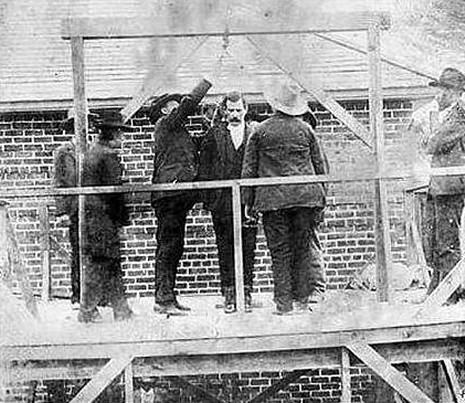
Congressman Harry Reid’s great-great uncle, Remus Reid, was hanged for horse stealing and train robbery in Montana in 1889.

Here’s a classic account by Harry Reid’s staff, to spin the above history, as an example:Remus Reid was a famous cowboy in the Montana Territory. His business empire grew to include acquisition of valuable equestrian assets and intimate dealings with the Montana railroad.

Beginning in 1883, he devoted several years of his life to government service, finally taking leave to resume his dealings with the railroad. In 1887, he was a key player in a vital investigation run by the renowned Pinkerton Detective Agency.

In 1889, Remus passed away during an important civic function held in his honor when the platform upon which he was standing collapsed.”

Continue reading

Notable Area Pagans Speculate on 2011

I sent a request out to several Pagans I considered notable, experienced, and yes, maybe intuitive enough to speculate on the coming year with some degree of accuracy. I asked three questions:

  1. What is your intuitive vision for the future of the Pagan community for the next year?
  2. If a Tarot card, or another archetypical symbol would reflect your vision,  which would it be and why?
  3. How will Paganistan look different in a years time?

Responses I received in no particular order:

Susu:

1. The financial squeeze for many should result in a tighter embrace of our collective of our ties to each other.
2. The symbol I see is the spiral cycling in and out simultaneously.
3. Paganistan’s  population will grow as the gods of the dominant religion continue to fail the people.

Continue reading

Interview with Pagan Athropologist, Murph Pizza

I had the opportunity to interview Murph Pizza in August at the Sacred Harvest Festival. She is affectionately called Paganistan’s own “resident anthropologist”. Murph secured her Doctor of Anthropology degree about a year ago. Her published thesis is called, “Paganistan, the growth and emergence of a contemporary Pagan community in Minnesota’s Twin Cities”. It is an ethnography, or recent history and an analysis of what kind of patterns, practices, and customs exist in the Twin cities. It is available through the University of Minnesota library, inter-library loan.  She offers insights into Minnesota Pagans, that you may not know or have forgotten… Read on!

Murph Pizza, PHD Cultural Anthropology

What is Pagan culture?

When we talk about in anthropology about, ‘what is culture’, we kind of have working definitions but what we try to instill, when we are talking about culture, is that culture is patterns of learned behavior. They are passed on from one generation to the next, and usually they are passed on systematically somehow. They could be religious traditions, they could be foods or recipes, but anything that is cultural is learned. To be able to see the emergence of Paganistan as a culture you need a long enough span of time to see what is continuing to be repeated, and when are the innovations in the community necessary. That is really interesting to watch.

Is Pagan culture something outside of mainstream culture, or is it totally contained within it?

Continue reading