PSG Report: Looking for, and finding, love

Finding a suitable partner is difficult for anyone. With more Pagans saying finding a partner who shares their values, if not their religion, the search for a match is even more difficult. How to overcome that challenge? Attend one of the large gatherings of Pagans at festivals such as Pagan Spirit Gathering (PSG). At this year’s PSG attendees were invited to a single’s meet and greet, attend the wedding of a couple who met at last year’s PSG, and wish Circle Sanctuary‘s Rev. Selena Fox and Dr. Dennis Carpenter, who met and later married at PSG, a happy 27th wedding anniversary.

Rev. Fox says that from the very beginning of PSG, straight and same sex couples have met, and married or handfasted, at the festival. “I think the courting dimensions of attending festivals is something quite old and never goes out of style. I’m happy for all the good relations that have come out of PSG,” said Rev. Fox. What is changing are the increasing numbers of Pagans who attend festivals with the express purpose of finding Pagan, and not just Pagan friendly, mate. Yet just like in the mundane world, sometimes love finds you when you aren’t looking for it.

 Wedding Bells
Although Brandon Mullikin and Nikki Pazdra didn’t attend PSG to find a mate, they met at last year’s festival and were handfasted at PSG 2013 on Tuesday night. Mullikin said he noticed Ms. Pazdra right away, “I happened to see her walking around and I couldn’t help myself but to find out where she camped and I had to creep by every now and then.”
While Millikin was making up excuses to walk by her camp, Pazdra was doing the same thing, “It’d be alot easier to go a certain way to the shower house, but I’d take the long way so I could pass by his tent.” Both were too shy to introduce themselves to the other so friends and family intervened.  “We didn’t talk until my sister introduced us because she was friends with [Pazdra’s] friend,” said Millikin. From that point, the two were inseparable.
couple 1

Then PSG ended and Millikin went back to Gatlinburg, Tennessee and Pazdra went back to Chicago, Illinois. They kept in touch through Facebook, Skype, and phone. A few months after the end of the festival, Pazdra visited Millikin in Gatlinburg for a few weeks. A month after that the couple moved to Nashville and bought a home together.

The couple decided to take the next step in their relationship by getting handfasted where it all began, at Pagan Spirit Gathering. And where Millikin’s father, Danny, was handfasted the year before to Rebecca Hubbard. Both handfastings were officiated by Rev. Selena Fox, of Circle Sanctuary. Circle Sanctuary hosts Pagan Spirit Gathering.

Single Pagan Seeking Same For Relationship

“I want to find more people like me, single and Pagan,” said James, who attended the Singles Meet & Greet Tuesday afternoon at PSG. James said it’s hard to meet single Pagan women where he lives, which is rural. It was his first time at an event like this and he felt optimistic about being able to meet someone compatible.

His optimism was not misplaced. There were over 40 Pagans at the singles event, almost evenly split between males and females*. Some were looking for someone of the opposite sex, some were looking for same sex relationships, while still others were open to anything.  All attendees PNC was able to speak with said they were looking for a relationship that had the potential to lead to marriage. Most said it was very important to them that a prospective spouse be Pagan.

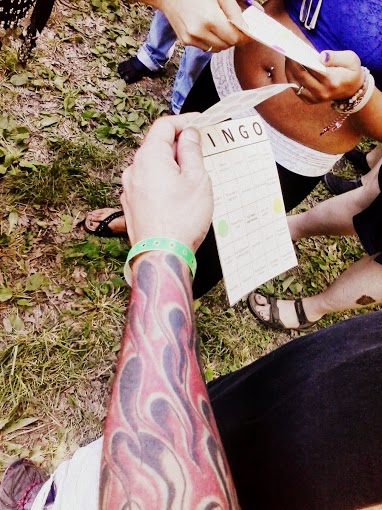
The meet & greet’s organizer, Steffanie, encouraged individuals to mingle by playing a game called Human Bingo. Each attendee got a card and they had to find people who matched the notes in the squares. “Have you ever walked a cat on a leash?” asked one single Pagan. “No. Are you a glamper?” he responded back.
human bingo (1)

While most attendees were busily engaged with the game, and with each other, a few stood uncomfortably on the outskirts of the group. “I’m not good with groups. I can’t do this,” said one male in his early 20’s. Soon Steffanie spotted him and helped him mingle back in with the group.

Lisa, who hails from south Texas, said that while there’s an active Druid community where she lives, it’s mainly made up of married couples and families. “I’m hoping to meet someone at PSG. I live in a really, I live in a dating desert so I’ve come to the fountain to drink.” After fifteen minutes of the game she was less optimistic about meeting someone during the meet and greet, but was looking forward to the more informal nightly singles get togethers.

PSG has hosted singles events over the past 33 years, but Rev. Selena Fox noted there is a rising interest in them, “We don’t have them every year but there’s been more of a request to have some times where people can actually see who is single. I think they’re a great idea and anyone that is interested in proposing other kinds of ways to connect – wonderful!”

To help singles find each other in a festival of over 1000 attendees, singles were given bright green bracelets that said I’m single, Let’s Mingle. Organizers of the event also used social media as a way for singles to get to know one another before PSG started. “I felt more comfortable coming [to the meet & greet] because I had already met a few of the people on the singles event page,” said Willow.

single (1)

“I think that social media provides a way of being able to make some connections, but there really isn’t a good substitute to meeting someone face to face,” said Rev. Fox. She went on to say, “If you’re at a Pagan festival that has emphasis on community and has shared values that helps with a filtering process in bringing people together that have some commonalities already.”

“Obviously here it’s great because automatically if your here you have most of the values that I treasure and cherish,” said Ladi, who had also been part of last year’s PSG Single’s Meet and Greet. He said he made great friendships last year and looked forward to doing the same this year. He was realistic about forming a relationship at a festival, “A relationship has to be worked towards. Anything worth doing does take time and work.”

Handfasting at the Pond
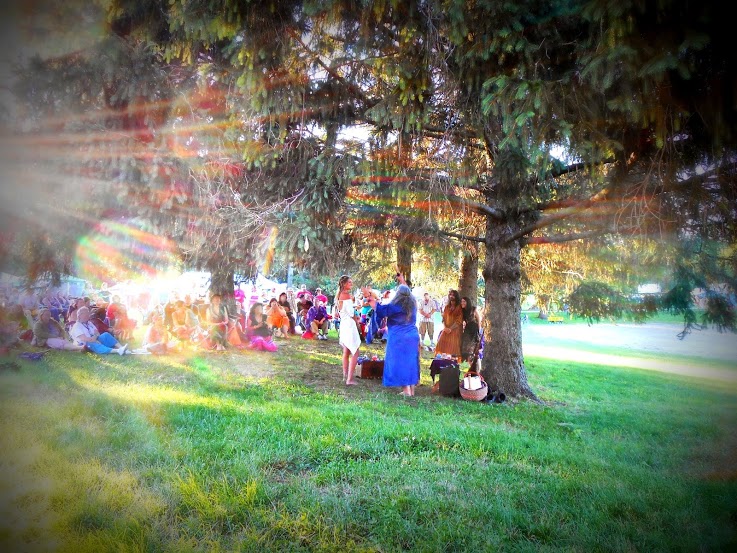
Millikin and Pazdra’s handfasting took place near the pond and was open to all PSG attendees. The ceremony had a distinctive Celtic flair and was filled with music, which makes sense as Millikin is part of the band Tuatha Dea.
handfasting wide shot corrected
The newly handfasted couple walks the circle.

The newly handfasted couple walks the circle.

Father and Step-Mother of the groom look on.

Father and Step-Mother of the groom look on.

Twin Cities band Murphey’s Midnight Rounders performed a song they wrote especially for the event. “That song was beautiful,” said one tearful guest. “I want that at my handfasting,” she went on to say, holding her girlfriend’s hand tight.

Editor’s note: video is blurred to protect the identity of children playing in the background.
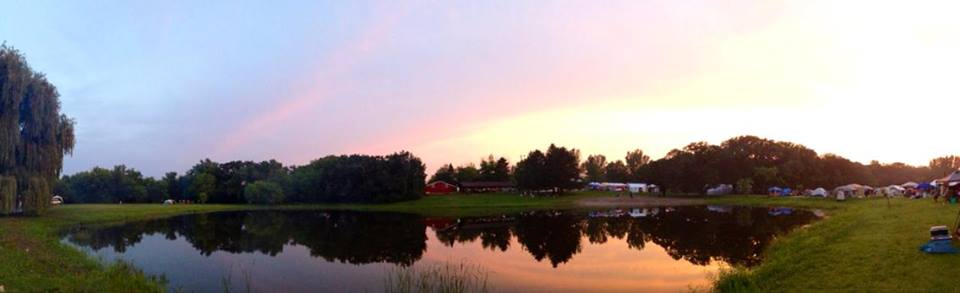
As for our Pagan singles, how did they make out at this year’s PSG?  At least two attendees of the Singles Meet & Greet felt they had met someone they want to start a relationship with. “We’ve already made plans to visit each other next month,”said Willow. “Who knows, perhaps Selena will be handfasting us next year.”

Pagan Spirit Gathering 2013

Pagan Spirit Gathering (PSG), one of the oldest Pagan camping festivals in the US, may have surpassed last year’s record breaking attendance. Final numbers are not yet available, but preliminary figures set attendance at 1070 registered guests. The festival was a combination of old and new. Same location, Stonehouse Farm in Illinois, but with new owners. Many familiar faces, but unofficial estimates put first time attendees at 30% of total attendance. There are also some new trends that appear to be emerging within the Pagan community that are very old trends in mainstream society.

In the coming week, the Pagan Newswire Collective is covering the old and the new at PSG in our PSG Report series. Some of the upcoming articles include:

  • An interview with the new owners of Stonehouse Farm and what’s in store for the future.
  • How PSG is a tribe of tribes.
  • Marty the Drama Llama and how Psyche’s Grotto helps PSG attendees deal with life and festival drama.
  • Looking for love (and marriage) at Pagan festivals.
  • A warrior blessing ritual.
  • An exploration of how it may be Pagans, and not conservative Christians, who are the banner bearers for traditional family values.

PSG 2013 – an overview in short takes

Photo by Edmund Zebrowski

Photo by Edmund Zebrowski

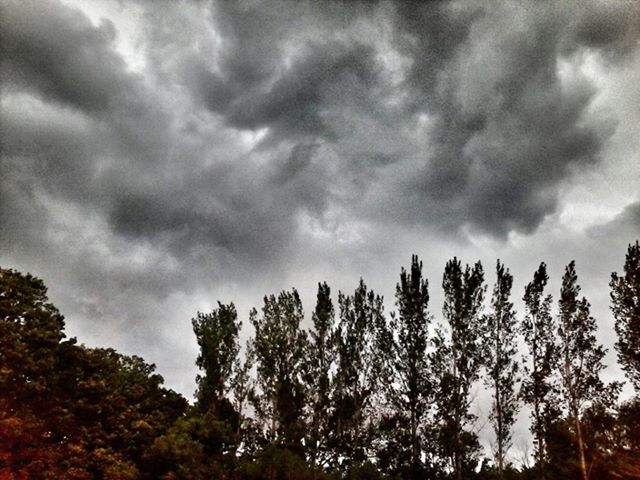
The weather was almost the reverse of 2011. This year we had sunny, 80 degree days at the start of the festival and rain, flooding, and muck at the end. Both years were an improvement on 2012 where the extreme heat caused many campers to seek medical attention and made sleep difficult. However, just like in 2011, there were problems caused by the Friday afternoon and Saturday morning storms. Tents collapsed or were flooded. Some not only made the most of it, they turned it into a party, complete with floating through flooded areas of camp and mud wrestling.

stormflood

To counter the sadness of familiar and long time PSG attendees not able to make the festival this year, there were many new faces at PSG this year. The virgin bell,which is rung when a first time attendee enters the gate to the campground, seemed to never stop ringing. It’s not unusual to have over 25% of attendees be PSG virgins, but this year the number appeared higher than normal. Conversely, the informal camps that spring up at PSG, with people camping as a group and coming up with names (and even t-shirts) for their group also appeared to be more numerous.

First time PSG Attendee Jimmy rings the virgin ball. Photo by Starr.

First time PSG Attendee Jimmy rings the virgin bell. Photo by Starr.

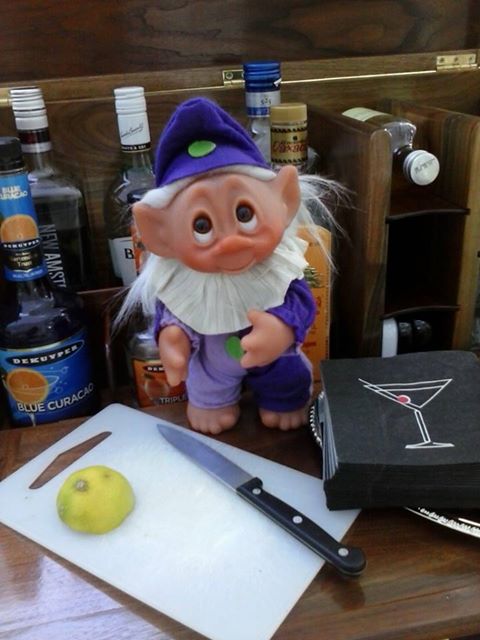
While you can always count on gnomes and fairies to adorn Pagan campsites, this year the gnomes took over. I blame a tenor named Chris. There was Gnome Camp, where people devoted to gnomes pitched their tents. There were more gnome decorations. There was a gnome contest to be played amongst the merchant booths. And there were roaming gnomes which would randomly show up in your camp. One even made it into Media Camp on morning.

A roaming gnome sits among PNC's important reporting tools.

A roaming gnome sits among PNC’s important reporting tools.

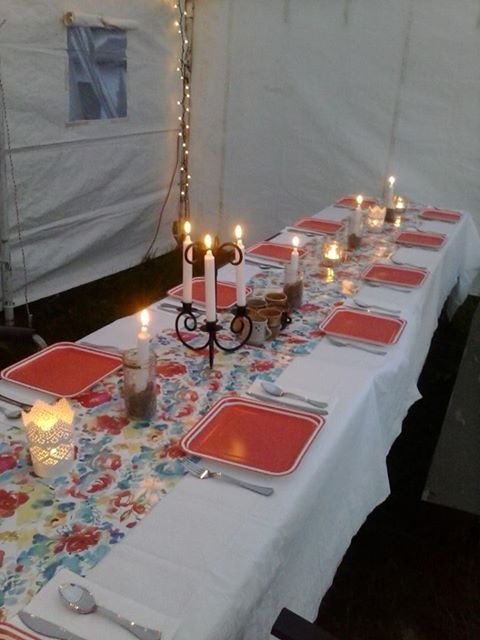
Food and drink have always had a place at Pagan events, but this year was up a notch. Filet mignon with demi glaze and infused simple syrups were on the menu at several campsites. Not only was the food more upscale, the campsites themselves were all about glamping (glamorous camping). A Pagan ethic of being extremely eco-conscious and simply was still evident, but the trend towards  providing more elegant and comfortable hospitality was more prominent. This mirrors the trend in the mainstream, but perhaps this is also a sign of greater religious diversity in the Pagan community as hospitality ethics become as important as eco and feminism ethics and influences.

symposia

The theme of this year’s PSG was Connections, but the organizers may not have had social media in mind when they came up with it. PSGers were online more this year than previous years. They posted photos, videos, updated their statuses, and made plans to meet for lunch or arrange to pass of child care duties while enjoying the festival. Workshop handouts were made available electronically and there was even a workshop for technomages called “There’s an app for that.” Use of technology was, for the most part, very unobtrusive out of respect for those trying to unplug, but expect the use of social media during festivals to increase, not decrease.

psg tenchology

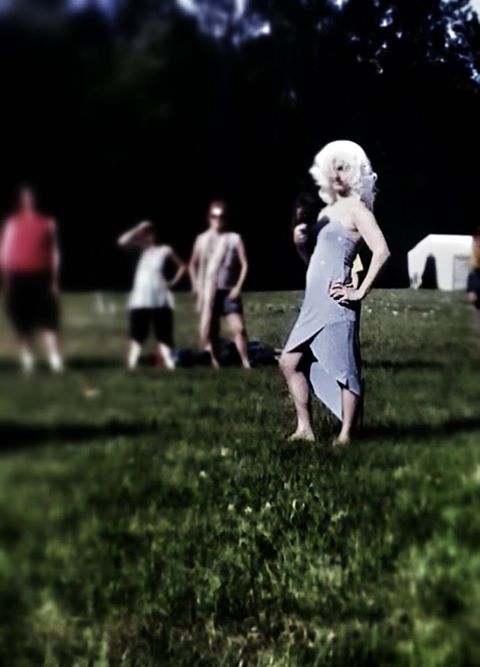
Rainbow Camp, a group comprised of GLBT Pagans and their straight allies, brought back the Rainbow Ritual. The ritual was attended by over 30 Pagans and one attendee said it was “The most powerful and moving ritual I’ve ever attended. I don’t often get to interact with gay Pagans as I live in a rural area. I was just touched.” The ritual, which was done in drag, and the very visible and active presence of Rainbow Camp was welcome after several years of gender controversy at festivals and conferences.

PSG Drag

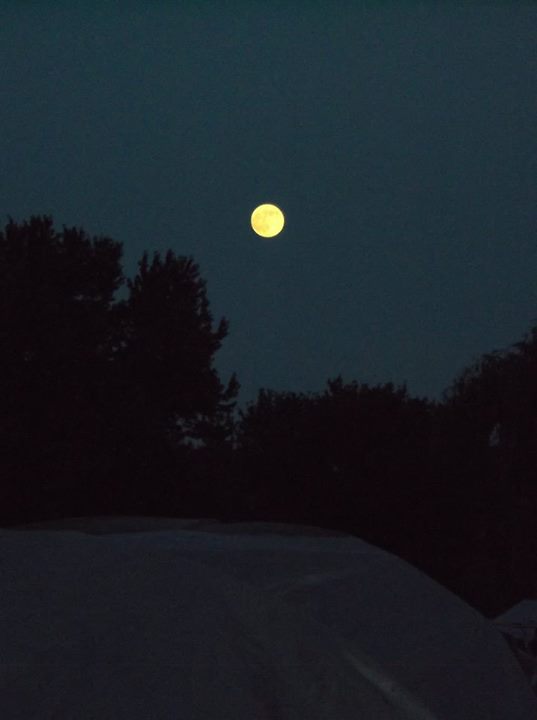
Not only was PSG celebrating the summer solstice, but a super moon also made a magical appearance. A super moon is a full moon which occurs with the moon at or near (perigee) its closest approach to Earth in a given orbit.  The main ritual, hosted on the last Saturday evening of the festival, was graced by the light of the super moon.

super moon

This year’s PSG had many of the things you expect from a Pagan festival. There was all night drumming around the bonfire, rituals, musical performances, and more workshops than a person could ever hope to attend – even if they cloned themselves 7 times over. Hugs, cries of “welcome home” as people entered, and lots of really well made mead. Pagan festivals are an important part of the Pagan experience and they allow you to not only come together to worship communally and to enjoy being fully Pagan for a few days, they allow you to see where Paganism is heading and what challenges we face and offer an opportunity to be part of guiding and shaping the future of our diverse communities. PNC would like to thank all those at this year’s Pagan Spirit Gathering who allowed us to interview and photograph them so our history in the making can be recorded and not lost.

The Makings of a Priestess – Editorial

Rainbow and Janet Farrar

Rainbow and Janet Farrar

I was able to connect back up with Janet Farrar and Gavin Bone after twenty years or so at Heartland Spirit Gathering  last week. I am transcribing over two hours of recorded interviews into something manageable for publishing next week.  Our interview was interrupted by  a personal ceremonial commitment, and so I left them on their own to relax in our merchant booth.

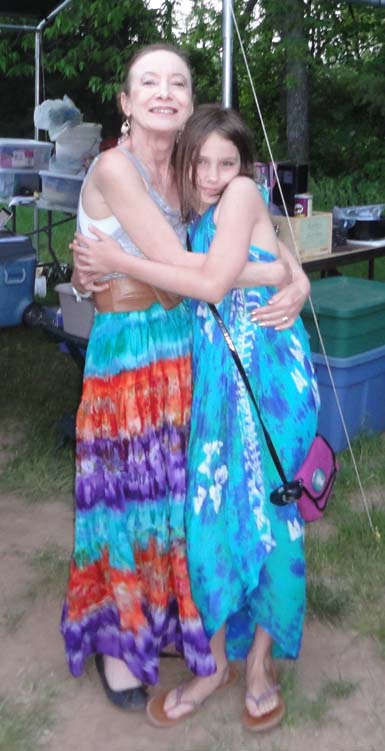
A young lady of eleven, Rainbow, had been working all day for various merchants, doing service and selling what she found to raise money for a small drum for herself.  She started earning by helping me deliver ice as a community service task that morning. She came to the booth frequently to report her fund-raising progress and so returned with a report in my absence that she gave to Janet Farrar.  Just a few dollars short now, Janet took her by the hand and went visiting merchants and shoppers, explaining her young friends plight. Within a few minutes the balance needed for the purchase was secured, and when I returned the drum was purchased, and Rainbow ran off overjoyed. The interview then resumed.

The next day I tracked down Rainbow’s parents for permission for a photo, and I learned more about Rainbow than I knew from the experience the day before. She had announced to her family she was going to get a drum that day, and they had every confidence somehow she would make it happen.  We rounded up Rainbow and took her over to Janet for this photo.  She only knew Janet as that nice lady who helped her, and was delighted to discover she was also a guest of the event.

The interviews next week will include a lot of Pagan history, assessment of the present, and a view of the future. Janet and Gavin have strong views of what it means to be a priest or priestess, to speak with the gods, and where the leaders of the Craft of the future will come from. This selfless aid to help fulfill a young women’s goal illustrated to me a beautiful example of the daily work of a priestess, and the simple experiences that empower a determined priestess of the future.

Watch for the interview series with Janet Farrar and Gavin Bone next week.

Nels Linde

Paganicon adds ‘Sacred Gallery Space’

The third anniversary of Paganicon, a three day convention for Pagans, Heathens, and polytheists held in the Twin Cities, also features The Third Offering, a sacred gallery space and temporary shrine.

Producers for the art show say this exhibit is quite different from an art exhibit at a science fiction convention or even other Pagan conventions.  “This is one of the things that makes our project different from, for instance, a typical science fiction con, where anything and everything that might possibly  relate to the SF scene is brought together in a fairly chaotic assemblage,” says Paul Rucker, co-producer for The Third Offering.  “We are combining the atmosphere of a gallery with a temple. And to my knowledge, there is no other indoor Pagan con, not even Pantheacon, that is doing anything quite like this.”

The idea for this year’s gallery began with an art exhibit that Rucker and fellow Helga HedgeWalker created for Paganicon 2012.  It was open for only two hours, but the positive response by attendees convinced the Paganicon board to expand the concept and have it open throughout the duration of the convention.  Rucker and HedgeWalker were asked to design and co-produce the prototype  for this exhibition this year.

The name for the exhibit, The Third Offering, comes from local ritualist and historian Steven Posch. Posch and HedgeWalker belong to the same coven, which made three  offerings to Minnehaha Falls at the autumn 2012 Pagan Pride festival.  The first sacred offering was water, the second was bread, while the third offering was rose petals, representing beauty. “Steve’s model of the “three offerings”  not only demonstrates the value of making beauty, of creativity, as valid and essential components of experiencing the sacred, but also, as I came to see, a useful way of picturing cultural maturity,” said Rucker.  He went on to say that when concerns for survival, legitimacy, and other cultural basics are addressed, space is made for beauty. “I suggested calling our exhibition space,  “The Third Offering Gallery” to highlight the importance of Beauty as food for the soul, and for an evolving culture.”

Yet the space is not just an art exhibit, it’s also a temporary shrine.  That idea came from HedgeWalker, who believes shrines are part of how a community can interact with the sacred and the beautiful. Both co-producers say, in future years, they may expand the sacred gallery space to include artists whose specific task is to design the shrine and ritual activity for this event.

1 g-night-DarkSister


1 Nuit_Queen-of-Heaven
The Third Offering features paintings, charcoal, photography, ceramics, and mixed media.  Seven artists, including Rucker and HedgeWalker, are part of this year’s show. Rucker and HedgeWalker also hand selected the artists due to a shortened time table for getting the exhibit launched.  The Paganicon Board also wanted to create a first example of what this could be, before it was opened up further the next year.  For 2014 there will be an official Call For Art to give area artists time to  create new works for submission and there will be a committee that reviews submissions for acceptance.  Rucker says they are open to more three dimensional and sculptural works in the future and ” If we can figure out how to incorporate video and perhaps “time-based” installations in future, we would like to open up the field further.”

1 She_the_Flowering_of_ishtar

Rucker, who has created other group Pagan art shows in the past, says, “Pagan themed art is diff

icult to place in traditional galleries, and opportunities to experience several artists whose works and worldviews overlap in this vein, is rare.”  He

 hopes attendees gain something through the concept they are creating for Paganicon, “Helga and I are both committed to the idea that art’s essence must be experienced directly, in the flesh as it were, by contact with original works. There is a mana in originals that cannot be described, only experienced. How much more so, when several like-spirited works are housed together.”

The Third Offering opens with a reception this Friday at 9:30pm in room 232.  Some of the artists’ works are available for purchase.  Rucker, HedgeWalker, and Posch are offering a panel presentation Sunday morning on The Third Offering: Sacred Beauty.

Pagans and Privilege panel packs them in at PantheaCon

One of the most talked about educational sessions at Pantheacon, a conference for Pagans, Heathens, Indigenous Non-European religions hosted in San Jose, California each President’s Day weekend, wasn’t part of the official programming.  It was the Pagans and Privilege panel which explored the layers and effects of privilege within our religious community.  Panel members included  Elena Rose, Xochiquetzal Duti Odinsdottir, River Higginbotham and past Sacred Harvest Festival guest of honor Crystal Blanton.  Ms. Blanton and her family continued to attend  Sacred Harvest Festival since her first introduction to the festival even though they live in California.  The panel was moderated by T. Thorn Coyle, who has held workshops in the Twin Cities and across the USA.

Snapseed_8

Panelists from left to right: Elena Rose, Xochiquetzal Duti Odinsdottir, Crystal Blanton, River Higginbotham

The panel would spend an hour exploring how to recognize privilege and entitlement and open up dialogue around what can be a very divisive and contentious issue. Ms. Coyle had the original idea to create the panel and she recruited the four panelists.  Ms. Blanton said being part of the panel was a great opportunity because, “Being a Pagan of Color has it’s unique challenges and slowly we are finding different mediums to share our experiences to others so that we can grow and heal collectively. Yet, I do not think privilege begins or ends with race, I think it is a very layered concept that is often dismissed as a race thing only.”

The Pagans and Privilege proposal was originally submitted to Pantheacon to be part of the official programming, but like many other proposals, didn’t make the cut.  Covenant of the Goddess, New Wiccan Church and  the New Reformed Order of the Golden Dawn shared the Presidential Suite, a large multi room con suite, and they offered the group space for the workshop.  News of the panel spread through social media.  And spread.

“I didn’t know we would draw as many people as we did,” says Ms. Blanton.  “When the facebook invite started to circulate, I saw the people saying yes and thought maybe half would show. I was very wrong and yet very pleased that  people wanted to come to participate in such a complex discussion.”

Minnesota Pagan and author Lisa Spiral Besnett wanted to attend the panel because of the respect she has for the panelists, but also because she has an interest in the topic, “I have a broad exposure to people and cultures and I am very much aware of the privilege I hold as a white woman, even when I’m Pagan identified.  I also experience global discrimination due to my weight and my wheelchair dependent son, and occasionally because of my religion.  Having spoken with Pagans with non-white/Eurocentric racial identities I also am aware that I am not always conscious of how I contribute to furthering my own privilege, even within the pagan community, sometimes at the expense of others.”

Ms. Besnett, like an estimated 25 others, wasn’t able to attend the panel because the room was already packed.  “When people started sitting on the floor to make room, I got the idea that this might be a heavily attended program,’ said Blanton, “then I started wishing we had more  space and  more time.”  Forty two people wedged into the single room.

The panel opened with Coyle talking about what is meant by privilege.  “If you have clean drinking water coming out of your faucet,  that is privilege.”  She emphasized the discussion about privilege would not be about placing blame, guilt, or victimization but about gaining a deeper understanding of one another and exploring differences and common ground.  Privilege is often defined as the advantages a person or group has that are so normal to them they are usually unaware of them.

Panel moderator T Thorn Coyle

Panel moderator T Thorn Coyle

The panelists, who spoke from varied minority perspectives, then shared how each of them were privileged.  Ms. Rose, a transgender woman who was disowned by her family, discussed how her high quality of education gained her advantages not shared by most others.  Not only did she have a stronger academic background, she knew how to find information, which is a skill that confers privilege,  “I would say just look it up.  Just google it.  And they wouldn’t know what I meant.  They didn’t know how to find the information they needed.”

Heather Biedermann, a Mankato Heathen, said she enjoyed how each of the panelists admitted to what privilege they had and how they were lucky to have various kinds of support.  ” These privileges were seen as blessings that made it possible for them to be there speaking to the group. Those who didn’t have the same privilege talked about how they had to deal without having that benefit, and it really opened my eyes to not take anything for granted. After hearing the stories of each on the panel, I felt like I identified even more with each person, even though all of us come from different backgrounds.”

Ms. Odinsdottir had advice for those who sit at the pinnacle of privilege in the United States, “Don’t apologize for things you didn’t do, don’t say you’re sorry for what others have done.”  She told attendees that misplaced guilt is not helpful, but being aware we live in a white supremacist culture is. Some of the attendees leaned back or looked confused or unhappy at her statement.  She explained a white supremacist culture has nothing to do with being a skinhead, it is simply a culture where white culture is supreme and in a position of power.

Mr. Higginbotham joked about his position of privilege saying he’s a white male with a good income.  Like the other panelists he echoed times in his life where he has unthinkingly enjoyed the benefits of privilege and how difficult it is when that privilege is yanked away from him.  He spoke about how, due to his religion, he’s had a deep concern he could lose his job.

One of the most tweeted quotes from the panel came from Blanton, “We are all oppressed and we are all oppressors.”  This drew nods from many of the attendees and panelists as the words sunk in.  Later, Blanton spoke about this moment, “One moment that sticks out to me was the emotion that was evoked within me when speaking about my own privilege, a privilege that the kids I work with do not have. I think people automatically assume that those who talk about privilege are standing in a “victim” mentality role. I recognize that I am often the oppressed and the oppressor. I am humbled by a society that puts people in a position to be on both sides of the fence and awareness becomes the most important tool we can harness.”

Ms. Biedermann said she thought the panel would focus on problems that were prevalent in the community and ways we can work to fix them. “Instead,” she said, “the focus was on the privileges that each of us may have in our lives and how those things may make life easier for ourselves compared to another person.”  She went on to say the panel “really opened my eyes to how all of these things can stack up and make a person have more opportunities than another. The idea here wasn’t that you should feel bad or guilty about these privileges, but instead to understand where other people are coming from, and to be more sensitive to what is going on in the world around you.”

The hour long discussion was paced by Coyle who asked the audience and panel to stop and take a deep, slow breath.  These breath breaks were designed to allow participants and attendees to maintain control over powerful emotions and to let meaning sink in.  Towards the end of the discussion, Coyle invited attendees to continue the discussion at the Pagans Of Color hospitality suite, as their allotted time was almost up.

Blanton says she plans to do more Pagans of Color programming next year at Pantheacon and said a second Shades of Faith book may be released by then.  That news is welcome to both Besnett and Beidermann.  “I would absolutely be interested in continuing this discussion in a larger venue,” said Ms. Besnett, “It’s not the kind of issue that can be resolved by a single event.”  Ms. Biedermann concurs, “As the panel talked, I knew that there was so much to say, and an hour or two wasn’t even enough time to touch the tip of the iceberg. Next year, I hope to see more sessions talking about privilege and diversity in Paganism. It’s so important that we explore these topics even more.”